Which aerial work platform for which job? The decision guide in five questions
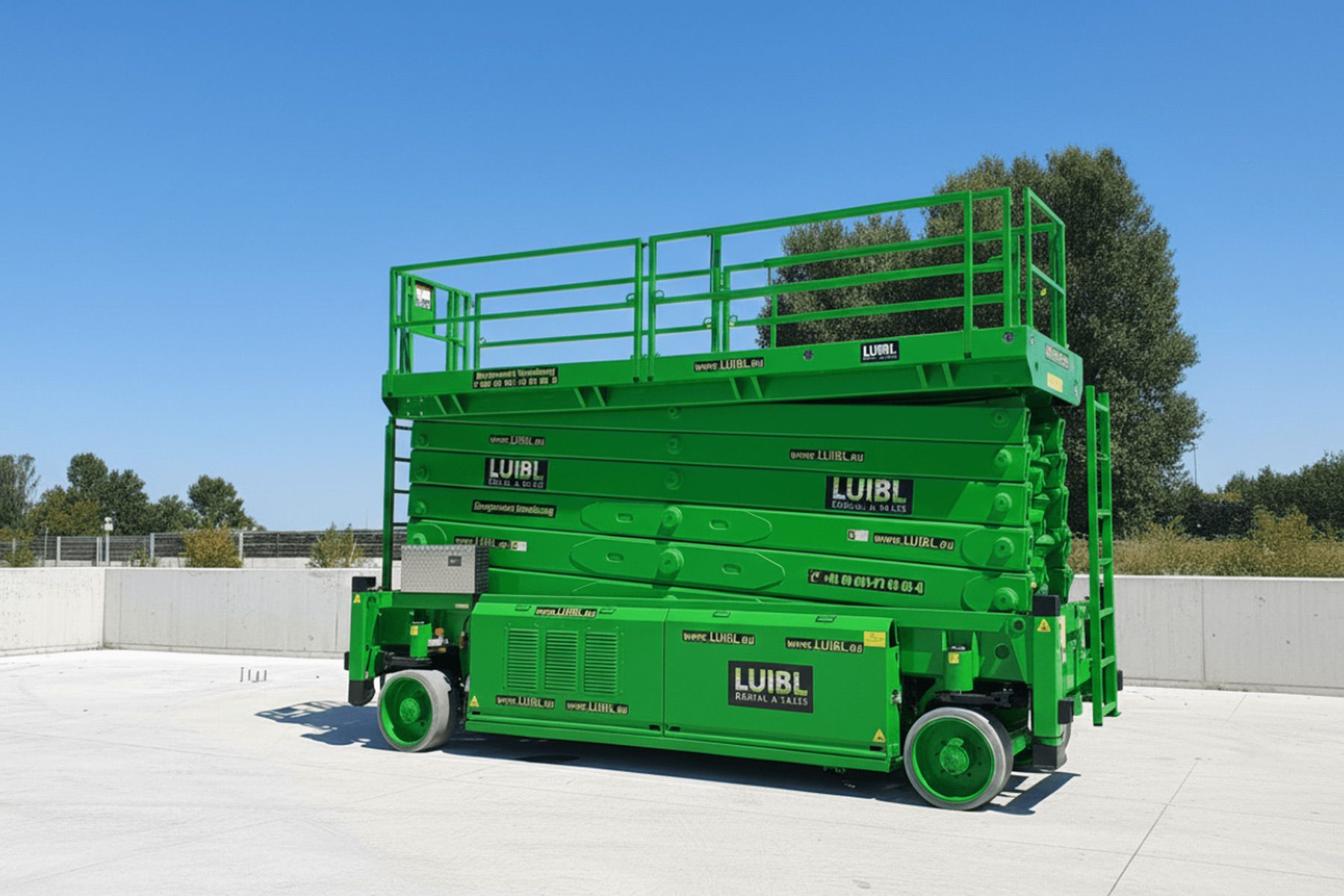
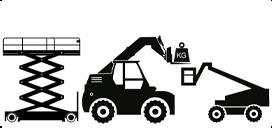
Which aerial work platform suits your job is decided by five questions in a fixed order: How high? How far to the side? Which ground and which access? Indoors or outdoors? How much load on the platform? Answering them one after the other rules out types with each answer and reliably leads you to one of seven kinds of platform — from the mast lift to the telescopic boom lift with 56.90 m working height.
The choice today is wider than ever, and the types overlap strongly in height: a working height of 20 metres is reached equally by scissor lifts, articulating boom lifts, telescopic boom lifts, spider lifts and truck-mounted platforms. Height alone therefore almost never decides. This decision guide takes you through the five questions, shows an application matrix for typical tasks at the end and names the three most common wrong decisions.
What is meant here is the mobile elevating work platform under NEN-EN 280, not the stationary vehicle lift in a workshop. You can find all types you can rent from Luibl Rental on the page Aerial work platform rental.
Question 1: the working height narrows the right aerial work platform down to a few types
The working height is the platform or basket height plus around 2 m reach height. Anyone working on a ceiling at a height of 12 m therefore needs a platform with around 12 m working height — not 12 m platform height. Plan in some reserve so that the operator does not work overhead and at the limit.
The working heights in the Luibl rental fleet:
| Type | Working height | Platform capacity |
|---|---|---|
| Mast lift | 10.00–12.65 m | 200 kg |
| Electric scissor lift | 6.30–33.00 m | 227–1,000 kg |
| Diesel scissor lift | 9.70–34.00 m | 363–1,134 kg |
| High-bay scissor lift | 18.50–33.00 m | 450–1,000 kg |
| Electric articulating boom lift | 10.89–28.00 m | 150–280 kg |
| Diesel articulating boom lift | 11.91–48.15 m | 227–450 kg |
| Telescopic boom lift | 14.00–56.90 m | 227–454 kg |
| Spider lift | 13.00–39.50 m | 200–400 kg |
This results in three height bands: up to about 12 m, all types come into question, including the compact mast lift. Between 12 and 34 m, scissor lifts, articulating boom lifts, telescopic boom lifts and spider lifts compete — here questions 2 to 5 decide. Above 34 m, only articulating boom lifts, telescopic boom lifts and truck-mounted platforms remain, plus spider lifts up to 39.50 m.
Question 2: if there is an obstacle in the way, the aerial work platform needs a boom
If the work point is directly above the standing area, a platform that lifts vertically is sufficient: a scissor lift or mast lift. As soon as something is in the way between the standing area and the work point — a canopy, a row of machines, a trench, a parapet — outreach is needed.
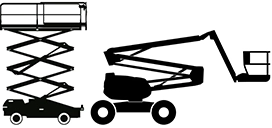
- Articulating boom lift: the articulated arm reaches over obstacles, then the telescopic section extends. It is the choice for work points behind or above obstacles.
- Telescopic boom lift: the straight boom delivers the greatest reach in height and to the side but needs a clear path. It is the choice for great heights without obstacles.
- Truck-mounted platform and spider lift: both work with a boom and are set up on outriggers before lifting; they combine reach with special access (road or difficult terrain respectively).
Please note: outreach depends on the load. The machine's reach diagram shows how far the basket may extend with which load. How to weigh up scissor lifts and articulating boom lifts in detail is shown in the guide Articulating boom lift or scissor lift.
Question 3: ground and access rule out aerial work platforms before height counts
In practice, the choice of machine fails more often because of the route to the work point than because of the height. Three checkpoints:
Load-bearing capacity of the ground
Self-propelled platforms put high point loads on the ground. Underground car park and basement slabs, freshly backfilled areas and paving must demonstrably be able to take the load. Where this is not certain, the spider lift is the solution: it weighs a fraction of a self-propelled platform of comparable height and distributes the load via outriggers.
Access width and height
Compact electric scissor lifts fit through standard doors. Spider lifts get through narrow gates into courtyards and existing buildings. Articulating boom lifts need not only the passage but also slewing space for the superstructure.
Terrain and gradient
Electric scissor lifts need level, paved surfaces. Diesel scissor lifts and diesel articulating boom lifts with four-wheel drive can travel on prepared site ground; for embankments, lawns and soft ground, the spider lift remains the specialist.
Question 4: indoors or outdoors – the site determines the drive of the aerial work platform
- Electric: locally emission-free in operation and low-noise, and therefore the first choice in halls, warehouses, production and occupied buildings. A load-bearing, level floor is required.
- Diesel: for outdoor jobs, rough terrain and long working days without charging facilities. Because of the exhaust fumes, diesel is not an option in enclosed spaces.
- Hybrid or bi-energy: combines both — combustion engine outdoors, electric indoors. Useful when a machine alternates between hall and yard.
The drive also changes the costs: electric platforms have no fuel costs but need charging time. The detailed comparison is in the guide Diesel or electric aerial work platform. For outdoor jobs, the wind limit of the machine also comes into play — what applies is explained in the guide Wind speed and stability.
Question 5: a lot of material on the platform points to the scissor lift
Platform capacity clearly separates the types. In the Luibl rental fleet, scissor lifts carry up to 1,134 kg, articulating and telescopic boom lifts 150–454 kg depending on the model, mast lifts 200 kg.
Add up everything that goes on the platform: people (usually 80 kg per person for planning), tools and material. Two fitters with board material for drywall construction quickly exceed the basket load of an articulating boom lift, while on a large scissor platform they can work side by side. On boom lifts, additional load also reduces the usable outreach.
Application matrix: which aerial work platform suits which job?
The following matrix summarises the five questions for typical tasks:
| Application | Recommended type | Decisive factor |
|---|---|---|
| Ceiling installation, lighting, ventilation in the hall | Electric scissor lift | Load, indoors |
| Maintenance in the high-bay warehouse | High-bay scissor lift | Narrow aisles, height |
| Shopfitting, offices, narrow corridors | Mast lift | Access, low height |
| Installation above machines in production | Electric articulating boom lift | Obstacle, indoors |
| Facade above a canopy or extension | Articulating boom lift | Obstacle |
| Steel construction with lots of material, outdoors | Diesel scissor lift | Load, terrain |
| Roof, parapet or industrial facade above 30 m | Telescopic boom lift | Height, reach |
| Several sites per day, street lighting | Truck-mounted platform | Road travel |
| Courtyard, church, lawn or paving | Spider lift | Ground, access |
For special cases there are in-depth guides, for example on church restoration, on hall refurbishment with low ceiling height or on whether scaffolding or an aerial work platform is the better choice.
Three wrong decisions that happen most often when choosing an aerial work platform
- Confusing building height with working height. The working height already includes the reach height. Anyone ordering the building height plus a safety margin often rents one class too large — and pays the daily rate and transport for a machine that is heavier and wider than necessary.
- Looking only at the height. The platform reaches the height but not the spot behind the canopy, or it does not fit through the yard entrance. Always answer questions 2 and 3 before ordering, ideally with photos of the site.
- Comparing the daily rate instead of the total costs. An articulating boom lift costs more per day than a scissor lift but saves repositioning on facades with many work points. How to calculate the total costs properly is shown in the guide Rental costs for aerial work platforms.
Before any aerial work platform is used, operator, risk assessment and inspection certificate are in place
The choice of type also determines which competence the operators need. Scissor lifts belong to IPAF category 3a, self-propelled articulating and telescopic boom lifts to category 3b, truck-mounted, trailer-mounted platforms and spider lifts to category 1b. Every operator must have demonstrable competence in line with applicable Dutch health and safety rules or a PAL Card with the appropriate category, must be designated by the employer and must have received a machine-specific briefing. Details are explained in the guide IPAF and operator licence.
The risk assessment for the site is drawn up by the user — what it should contain is shown in the guide Risk assessment for height access equipment. Luibl Rental hands over the machine itself periodically inspected and with a briefing.
Aerial work platform rental: five answers to the right quote
Send us the answers to the five questions — working height, outreach, ground and access, indoors or outdoors, load on the platform — together with the site and rental period. Photos of the site help. If you need a type almost every day, you should also consider buying — the calculation is shown in the guide Rent or buy an aerial work platform?. You will receive a recommendation for the type and an itemised quote including delivery by low-loader to your site, throughout the Netherlands.
Aerial work platform rental — all types · Rent aerial work platforms · Request a quote now →
Frequently asked questions on choosing the right aerial work platform
Which aerial work platform do I need for a working height of 10 metres?
For purely vertical work indoors, an electric scissor lift or mast lift. If there is an obstacle in the way, a compact electric articulating boom lift; on difficult ground, a spider lift.
Which aerial work platform is suitable for facade work?
For a clear facade and lots of material, the scissor lift; for canopies, balconies or extensions, the articulating boom lift. Above 30 m, the telescopic boom lift comes into question.
Which aerial work platform may be used in enclosed halls?
Electrically powered platforms, because they are locally emission-free in operation. Hybrid or bi-energy machines may be driven indoors in electric mode; pure diesel machines belong outdoors.
Which aerial work platform is suitable for sensitive or soft ground?
The spider lift. It is light, distributes the load via outriggers and can cross lawns, paving and embankments as well as pass through narrow access routes.
What is the difference between a lifting platform and an aerial work platform?
None when it comes to work at height: 'lifting platform' is the everyday term for the mobile elevating work platform under NEN-EN 280. The vehicle lift in a workshop is a different machine.