Articulating boom lift or scissor lift: which platform for which job?
Short answer: two platforms for two problems
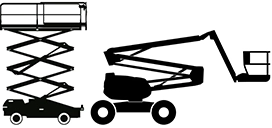
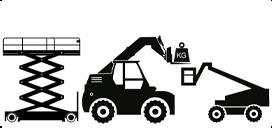
The two most common self-propelled aerial work platforms solve different tasks: the scissor lift raises a large area and load vertically, while the articulating boom lift brings a compact basket precisely around obstacles to the target. Choose the wrong one and you lose time - or cannot reach the work point at all.
This comparison provides the decision logic from the practice of a rental company that has both types in its fleet.
What is an articulating boom lift?
The articulating boom lift combines an articulated arm and a telescopic boom on a rotating superstructure. The result is outreach plus up-and-over height: the basket can be positioned over roof edges, machines or extensions - where a scissor lift simply cannot go. The jib on many models also allows fine positioning at the target.
The Luibl rental fleet includes articulating boom lifts with 10 to 48.15 metres working height and basket loads of 200 to 454 kg, as electric, diesel and hybrid machines.
Scissor or articulating boom: the direct comparison
| Criterion | Scissor lift | Articulating boom lift |
|---|---|---|
| Lifting principle | vertical | lateral outreach, over obstacles |
| Outreach | none (platform extension only) | depending on model, more than 20 m |
| Working height in rental fleet | 6.30-33 m | 10-48.15 m |
| Platform or basket | large, several people plus material | compact, one to two people |
| Load capacity | 227-1,000 kg | 200-454 kg |
| Ground | level (electric) to site (diesel) | level to rough terrain (diesel 4x4) |
| Rental costs | lower | higher |
All scissor lift designs - including high-rack and hybrid machines - are covered in the guide Scissor lift.
When the articulating boom lift is the right choice
Reaching over obstacles
Canopies, rows of machines, trenches, extensions: as soon as something is in the way between the set-up position and the work point, there is no way around outreach.
Precise work on facades and roofs
The rotating superstructure and the jib position the basket to the centimetre - ideal for installation, maintenance and inspection work at changing points without moving the machine.
Uneven terrain
Diesel articulating boom lifts with four-wheel drive and oscillating axle work on site surfaces where electric scissor lifts have to give up. For extreme ground conditions and narrow access, the spider lift remains the specialist.
When the scissor lift wins
Area, load, price: if the work point is directly above the set-up position, the scissor lift is almost always more economical - more space on the platform, more material at height, a lower daily rate. Drywall construction, hall lighting, ventilation installation and logistics maintenance are classic scissor lift domains.
Then there is the load capacity: with up to 1,000 kg, the scissor lift moves material that has no place in the basket of an articulating boom lift.
Decision matrix: six typical scenarios
| Scenario | Recommendation |
|---|---|
| Ceiling installation in a hall | Scissor lift (electric) |
| Facade work over a canopy | Articulating boom lift |
| Gutter on a residential building, several positions | Articulating boom lift, trailer-mounted platform if budget is the focus |
| Steel construction with a lot of material at height | Scissor lift (diesel) |
| Maintenance on machines in a production hall | Articulating boom lift (reaching over) |
| Large-area facade insulation | Scissor lift, with platform extension if needed |
The low-cost option for individual locations is explained in the guide Trailer-mounted platform.
Rent both platform types from Luibl
Luibl Rental rents scissor lifts and articulating boom lifts as electric, diesel and hybrid machines, periodically inspected under the Working Conditions Decree and with delivery throughout the Netherlands. Not sure which type is right? A short conversation with photos of the site usually clears it up in minutes.
Rent articulating boom lifts -> · Rent scissor lifts -> · Rental cost guide ->
Determining working height and outreach correctly
The most common planning mistake is confusing the building height with the required working height. Three values count:
Working height = platform or basket height plus around 2 metres of reach. If you have to work at 10 metres, you do not need a 10 metre platform.
Outreach is the real reason for choosing an articulating boom lift - but it is load-dependent. The outreach chart of each machine shows how far the basket may still extend with which load and at which boom angle. Two people with tools noticeably reduce the usable outreach compared with the data sheet value.
Up-and-over height describes how high the articulated arm can reach over an obstacle before the telescopic section takes over. It determines whether the basket can get behind a parapet or over a canopy.
With a scissor lift, the calculation is simpler: it lifts vertically, and the platform extension provides some overhang depending on the model - nothing more. All designs are covered in the guide Scissor lift.
Ground, stability and access
In practice, machine selection fails more often on the route to the work point than on the height.
Load-bearing capacity. Self-propelled platforms distribute their weight over wheels or tracks, but point loads remain high. Underground car park decks, basement ceilings and freshly backfilled areas must be approved by calculation.
Gradient. Every machine has a permissible longitudinal and lateral gradient for travel and for lifting - and the two values differ. The tilt monitoring blocks lifting when the value is exceeded; this is not a defect but the protective function.
Access width and clearance height. Compact electric scissor lifts start at 0.76 m width and fit through standard doors. Articulating boom lifts are wider and need slewing space for the superstructure - even if they just fit through the narrowest point themselves.
Floor protection. Non-marking tyres prevent abrasion on industrial floors; on sensitive surfaces, ground protection mats are also used.
Transport, set-up time and total costs
The daily rate is only part of the calculation. Three items regularly shift the comparison:
Transport. Both designs are delivered by low-loader. Larger articulating boom lifts require more transport effort than a compact electric scissor lift because of their weight and dimensions - for short jobs, this can exceed the price difference between the types.
Set-up and repositioning time. The scissor lift is ready for use as soon as it is unloaded. The articulating boom lift, on the other hand, saves repositioning: what it reaches from one position does not have to be driven to. On facades with many work points, this effect quickly adds up to several hours per day.
Staff time. Two people on a large scissor platform work in parallel; in the basket of an articulating boom lift, usually one person works effectively. For labour-intensive trades, this tips the economics in favour of the scissor lift.
Current rental price ranges for both types are listed in the rental cost guide.
When neither fits: spider lift and mast lift
Scissor lifts and articulating boom lifts cover most jobs - but in two situations both are the wrong choice.
The spider lift runs on tracks instead of wheels, weighs a fraction of a self-propelled platform of comparable height and is set up on outriggers on site. This means it can cross lawns, gravel and freshly laid paving, fits through gates from about one metre wide and works in courtyards, churches and existing buildings that no self-propelled platform can enter. In the Luibl rental fleet, these machines reach up to 40 metres working height and almost all are equipped with bi-energy drive: combustion engine outside, electric inside.
The mast lift is the answer for very confined indoor spaces with low ceilings: compact footprint, vertical lift, low weight, often suitable for transport in a lift. In shops, offices and corridors of existing buildings, it replaces the combination of ladder and mobile scaffold tower.
The rule of thumb: as soon as access or floor loading is the problem - not height or outreach - these two designs are worth a look. The aerial work platform overview guide puts all types side by side. If you are weighing up more than two designs, the decision aid Which aerial work platform for which job? guides you through five questions.
Frequently asked questions
What is the difference between a scissor lift and an articulating boom lift?
The scissor lift raises a large platform vertically, while the articulating boom lift brings a compact basket with outreach around obstacles into position.
What working heights does an articulating boom lift reach?
In the Luibl rental fleet, 10 to 48.15 metres, with basket loads of 200 to 454 kg.
Which platform is suitable for uneven terrain?
Diesel articulating boom lifts with four-wheel drive; for very difficult ground and narrow access, the spider lift. Electric scissor lifts need level, paved surfaces.
How much does it cost to rent an articulating boom lift?
More than a scissor lift of comparable height - outreach comes at a price. Specific ranges are listed in the rental cost guide.
Do both platform types require the same qualification?
Yes, both are aerial work platforms - for both, the required competence of the operator in line with applicable Dutch health and safety rules and an operator instruction apply; training is provided by external, recognised providers. More in the guide on operator authorisation.