IPAF, PAL Card and operator competence: obligations when renting aerial work platforms
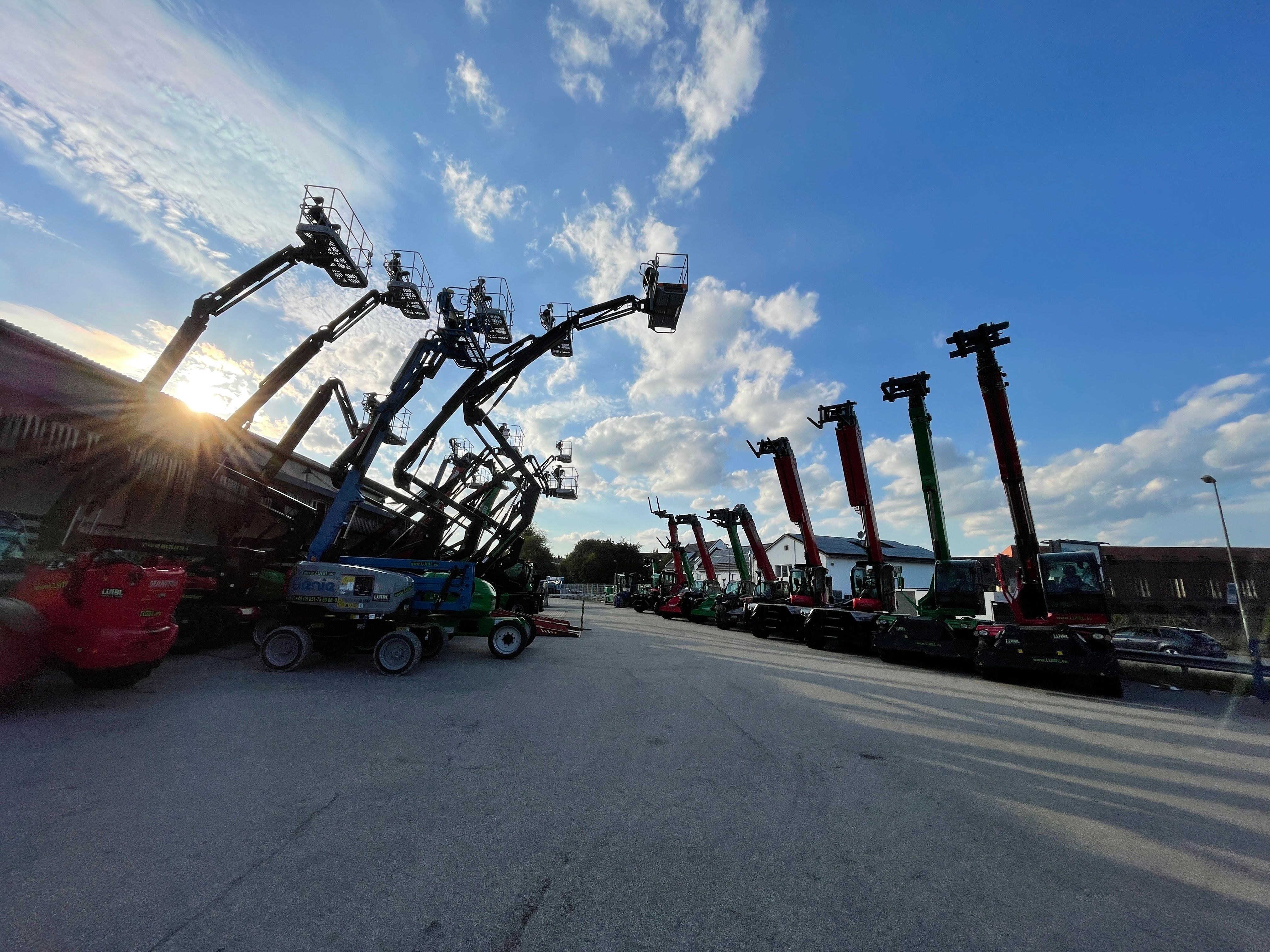
Anyone renting an aerial work platform must have three things in place for every operator: a qualification (for example an IPAF PAL Card demonstrating the required operator competence), a written assignment by the employer and a machine-specific briefing on the rental machine. The qualification must also match the type: anyone trained only for scissor lifts does not operate an articulating boom lift.
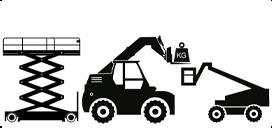
The responsibility lies with the renting company as the user. If any of these is missing and an accident occurs, the employer is liable — with consequences under occupational health and safety, civil and possibly criminal law. This guide explains which proof applies to which aerial work platform, how the IPAF categories are assigned and what Luibl Rental provides on handover. All types you can rent from us are shown on the page Rent an aerial work platform.
The IPAF PAL Card is the internationally recognised operator licence for aerial work platforms
The PAL Card (Powered Access Licence) is issued after a training programme of IPAF (International Powered Access Federation). The training combines theory with practical exercises on the machine and ends with an exam. The PAL Card is a common way to demonstrate the required operator competence.
The IPAF category must match the platform type
The PAL Card is only valid for the categories entered on it. In everyday rental practice, four categories are relevant:
| IPAF category | Type | Examples |
|---|---|---|
| 1a – static vertical | lifting vertically, outrigger-supported, not drivable from the basket | outrigger-supported, non-self-propelled mast lifts |
| 1b – static boom | boom, supported before lifting | truck-mounted platforms, trailer-mounted platforms, spider lifts |
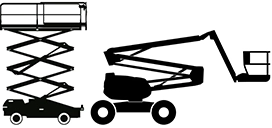
| 3a – mobile vertical | lifting vertically, drivable from the basket | Scissor lifts, self-propelled mast lifts |
| 3b – mobile boom | boom, drivable from the basket | Articulating boom lifts, telescopic boom lifts |
Anyone holding only category 3a does not operate an articulating boom lift (3b). This mix-up is one of the most common shortcomings found during site inspections. Before every rental request, therefore check which categories your operators actually hold.
The PAL Card is valid for five years
The PAL Card is valid for five years. Before it expires, the operator repeats the training for the required categories; an expired card is no longer valid proof.
The machine-specific briefing remains necessary despite the PAL Card
The PAL Card proves the basic knowledge for a category. It does not replace the briefing on the specific machine: every aerial work platform differs in controls, emergency lowering, safety circuits and load limits. Anyone who has operated one manufacturer's machines for years does not automatically know another's operating logic. Luibl Rental gives a briefing on the rented machine on handover.
Other recognised training can also demonstrate operator competence
In addition to the PAL Card, recognised training providers issue their own operator certificates for aerial work platforms. In terms of content, both routes cover the same: theory, practice and an authorisation linked to platform types.
The difference lies in reach: the PAL Card is known internationally and is often explicitly required on large sites of international clients. Luibl Rental accepts both — what matters is that the proof is valid and matches the platform type.
A written assignment records the operator's authorisation
It is advisable for the employer to also assign every operator in writing. This records that
- the employee is qualified for the platform types used,
- they have been instructed on the risk inventory and evaluation (RI&E) for the site and
- the employer has assessed their suitability.
Without an assignment, it is harder for the employer to demonstrate that the operator is authorised — even with a valid PAL Card. It is also recommended to repeat the instruction regularly.
Aerial platform certificate, platform pass, IPAF certificate: three names for the same obligation
Anyone searching for "aerial platform certificate", "platform pass" or "IPAF certificate" means the same thing: the proof of qualification for aerial work platforms. There is no statutory driving licence for aerial work platforms. What counts is the required operator competence, demonstrated for example with the PAL Card — plus assignment and briefing.
In practice, this means:
- "Aerial platform certificate" is the common term. In purchasing and tenders, it usually says "operator certificate for aerial work platforms".
- "IPAF certificate" means the PAL Card with the categories entered.
- The vehicle lift in a car workshop is not included; separate rules apply to it.
The costs, duration and providers of training are explained in the guide Operating aerial work platforms: who may operate one?. Which type you need for your job — and therefore which category — is covered in the decision guide Which aerial work platform for which job?
Example scenario: how a facade company organises the operators for three telescopic boom lifts
A facade company from North Brabant rents three telescopic boom lifts for a seven-week renovation in Utrecht city centre. Three in-house operators work in rotation, plus subcontractors.
The challenge: It is unclear who may operate which machine and whether all operators hold category 3b.
The company's approach:
- Collect proof: Before the rental starts, site management collects the PAL Cards and operator certificates of all intended operators — including those of the subcontractors — and checks category and validity.
- Assign: Every operator receives a written assignment for the telescopic boom lifts on this site.
- Arrange the briefing: On handover, Luibl Rental gives a briefing on the rented machines. The briefing is documented for each operator.
- Provide fall protection: The company supplies harnesses and lanyards itself; they are not included in the rental.
The result: during an inspection, site management can present qualification, assignment and briefing for every operator.
Inspection certificate and fall protection: machine and people must be secured
Every rental platform is handed over with a valid inspection certificate
Aerial work platforms are subject to the periodic inspection of work equipment under the Working Conditions Decree and are inspected by a competent person. Every aerial work platform in the Luibl Rental fleet is handed over with a valid inspection certificate. If the inspection expires during a long-term rental, Luibl Rental organises the re-inspection. More on the inspection and the check points is explained in the guide Periodic inspection of aerial work platforms.
Before starting work, the operator also checks the machine personally: emergency lowering, emergency stop, tilt warning, controls and a visual check for damage.
Fall protection is mandatory on boom lifts
On aerial work platforms with a boom — articulating, telescopic and truck-mounted platforms — the manufacturers prescribe personal fall protection equipment. The reason is the catapult effect: jerky movements of the boom can throw the operator out of the basket.
What this means in practice:
- Full-body harness to EN 361 with a short lanyard acting as a restraint system to prevent being thrown out
- Attach only to the designated anchor point in the basket, not to the guardrail
- Lanyard and anchor point as specified by the manufacturer; work positioning belts to EN 358 are not fall protection
On scissor lifts, fall protection is not always prescribed. However, the risk inventory and evaluation (RI&E) may require it, for example when working with an open guardrail or over water. Its use is governed by applicable Dutch health and safety rules and the manufacturer's instructions.
Renting aerial work platforms with legal certainty: three pillars for every operator
Responsibility does not end with signing the rental agreement. Anyone using an aerial work platform takes on the user's obligations as employer.
- Qualification: valid PAL Card with the right category or other proof of the required operator competence — for every operator
- Written assignment: the employer confirms qualification and suitability and grants permission to operate
- Machine-specific briefing: on handover by Luibl Rental on the rented machine
Luibl Rental does not offer training itself. If an operator does not yet have valid proof of competence at the start of the rental, please mention this in your request so that the training and the start of the rental can be coordinated.
The total cost of renting an aerial work platform is shown in the guide Rental costs for aerial work platforms.
Frequently asked questions about IPAF, operator competence and safety obligations
Do you need a driving licence for an aerial work platform?
Not for self-propelled aerial work platforms on sites and company premises — operator competence is what counts there. For truck-mounted platforms on public roads, the licence depends on the permitted gross weight: up to 3.5 t a category B licence, up to 7.5 t a C1 licence, above that a C licence.
Is an internal briefing sufficient instead of IPAF training?
No. An internal briefing does not replace the qualification. Training must cover theory and practice; it can be provided by an external provider or a suitable in-house trainer and is documented.
Which IPAF category do I need for a scissor lift?
Category 3a. It applies to vertically lifting platforms driven from the basket, i.e. scissor lifts and self-propelled mast lifts. Articulating and telescopic boom lifts require category 3b.
How long is the PAL Card valid?
Five years. Before it expires, the training for the required categories is repeated.
Who is liable if an operator works without valid proof?
The renting company as the user. It must ensure qualification, assignment and briefing; violations can lead to fines from the Netherlands Labour Authority (Nederlandse Arbeidsinspectie), work stoppages and liability in the event of damage.