Periodic inspection of aerial work platforms: frequency and inspection points
Inspection obligation for aerial work platforms: the legal basis
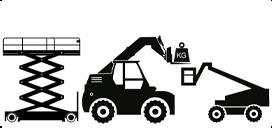
Aerial work platforms – whether scissor lift, articulating boom lift, truck-mounted platform, spider lift or trailer-mounted platform – count as work equipment for work at height and are subject to the inspection obligation under the Working Conditions Decree, Chapter 7 (work equipment). The periodic inspection of work equipment under the Working Conditions Decree applies to every type of platform – regardless of whether the machines are owned or rented.
This guide explains what users of aerial work platforms specifically need to have inspected, which points are inspected and how the daily pre-use check and the periodic inspection differ from each other.
The inspection obligation for aerial work platforms arises from several sets of rules:
- Working Conditions Decree, Chapter 7 (work equipment): employers must keep work equipment in good condition and have it inspected periodically
- Applicable Dutch health and safety rules and NEN-EN standards: specify the content and scope of the inspection and the competence of the inspector
- NEN-EN 280: European standard for aerial work platforms – safety requirements and design specifications on which the inspection is based. More on EN 280 →
- Personal fall protection: when working with personal protective equipment against falls, additional requirements apply to the anchor points
Inspection frequency: how often must an aerial work platform be inspected?
The inspection frequency follows from applicable Dutch health and safety rules, the conditions of use and the manufacturer's specifications. Shorter intervals apply in the case of:
- intensive use (multi-shift operation, permanent stationing on site)
- use in corrosive, damp or dusty environments
- special manufacturer specifications
- after an accident, overloading or identified defects (special inspection)
Checks before each shift are not periodic inspections – they are a separate daily task of the operator.
Daily check by the operator vs. periodic inspection
This distinction is decisive in practice:
| Daily pre-use check | Periodic inspection | |
|---|---|---|
| Carried out by | Operator before each shift | Competent inspector |
| Legal basis | Working Conditions Decree, Chapter 7, operating manual | Working Conditions Decree, Chapter 7 |
| Scope | Visual check, short function test | Full visual and functional inspection, load test if required |
| Documentation | Shift log (recommended) | Inspection report + inspection sticker |
| Interval | Before each shift | Periodically, in line with applicable Dutch health and safety rules |
Checklist for the daily pre-use check (not a periodic inspection, guidance for operators):
- Visual check for external damage, leaks, damaged lines
- Check of all emergency lowering and emergency control devices
- Function test of the movements (upper and lower controls) with safe set-up
- Read the inspection sticker – is the periodic inspection still valid?
- Check the ground before driving on
Inspection points in detail
Lifting mechanism and hydraulics
- Hydraulic cylinders of all lifting stages for leaks and tightness
- Hydraulic lines, hoses and connections
- Lifting speed and synchronous operation (scissor)
- Overload protection and tilt limiter
Emergency lowering and safety devices
- Emergency lowering and emergency control system for proper function (ground controls and platform controls)
- Tilt and overload monitors
- Dead man's switch and safety cut-outs
- Tilt and articulation safeguards (articulating boom lifts)
Platform, guardrails and anchor points
- Platform for structural integrity, welds, tilt protection
- Fall protection: guardrail, mid-rail, toe board
- Anchor points for personal fall protection (certified to NEN-EN 795, load capacity)
- Platform levelling and platform extension (on telescopic and articulating machines)
Documentation
- Inspection report with all inspection items and findings
- Entry in the inspection register / machine file
- Attachment of the inspection sticker with the date of the next inspection
Who may inspect aerial work platforms?
The periodic inspection of work equipment under the Working Conditions Decree must be carried out by a competent person with relevant qualifications for aerial work platforms. This includes, among other things:
- Relevant vocational training (e.g. mechatronics technician, motor vehicle, agricultural and construction machinery mechanic)
- Professional experience with aerial work platforms
- Recent professional work with this type of work equipment
Luibl Rental does not offer inspection services to third parties. For external, recognised inspectors, please contact accredited inspection bodies. Further reading: Who may carry out the periodic inspection? →
Platform types and their special features
Each type of aerial work platform has inspection-relevant features:
- Scissor lifts: scissor mechanism, slide guides, synchronous operation of the scissors
- Articulating boom lifts: articulation safeguard, all extension stages, platform levelling
- Truck-mounted platforms: additionally tyres, outriggers and steering (chassis)
- Spider lifts: track drive, contact area, terrain compensation
- Trailer-mounted platforms: stabilisers, coupling and lighting as vehicle equipment
Rent inspected aerial work platforms from Luibl
All aerial work platforms in the Luibl rental fleet are delivered with a valid periodic inspection of work equipment under the Working Conditions Decree and a current inspection sticker. As a hirer, you bear no responsibility for the periodic inspection – that lies with Luibl Rental.
With our own low-loader fleet, we deliver every category of platform – scissor, articulating boom, truck-mounted, spider or trailer-mounted – throughout the Netherlands, directly to your site. For specifications and availability: Aerial work platform rental →
On authorisation to operate: the employer ensures the required operator competence; on handover, Luibl provides an operator briefing. Operator competence explained →
Frequently asked questions
How often must an aerial work platform be periodically inspected?
Periodically, in line with applicable Dutch health and safety rules and the manufacturer's specifications. In the case of intensive use, special conditions of use or after accidents, the risk assessment may require shorter intervals.
What is checked during the periodic inspection of an aerial work platform?
The inspection covers the lifting mechanism and hydraulics, emergency lowering and safety devices, the platform with guardrails and anchor points for personal fall protection, the chassis and outriggers and all machine-specific safety functions. Result: inspection report and inspection sticker.
Does the operator have to check the platform daily?
Yes – but that is not a periodic inspection, it is a daily pre-use check under the Working Conditions Decree, Chapter 7, and the operating manual. Before each shift, the operator carries out a short visual and function check. The periodic inspection by a competent person does not replace this daily check and vice versa.
Who may inspect an aerial work platform?
A competent person with relevant training, professional experience and recent work with aerial work platforms. Luibl Rental does not offer inspection services; for external inspectors, contact accredited inspection bodies.
Are Luibl rental platforms inspected?
Yes. All rental aerial work platforms are delivered with a valid inspection sticker under the Working Conditions Decree. As the rental company, the periodic inspection is the responsibility of Luibl Rental.