Lift rental – aerial work platforms for every job
Anyone searching online for "lift rental" is, in the vast majority of cases, not looking for workshop equipment but for a mobile machine that safely brings people and tools to height – known in the trade as an aerial work platform or mobile elevating work platform. This page explains the term and takes you straight to the right machine from the Luibl range.
Important distinction: The stationary vehicle lift used in car workshops to raise vehicles is not part of our rental fleet. If you are looking for a machine for work at height on site, in a hall or for maintenance, you have come to the right place.
Lift or aerial work platform – what is meant?
In everyday language, the word "lift" is used for two completely different machines:
- Vehicle lift: stationary, permanently installed in the workshop, raises vehicles for servicing. Luibl Rental does not rent out this category.
- Aerial work platform: mobile, self-propelled or truck-mounted, brings people and materials to working height. Governed by NEN-EN 280, internationally also known as MEWP (Mobile Elevating Work Platform). This is exactly the machine category Luibl Rental rents out.
In B2B purchasing, professionals usually speak of an "aerial work platform". In internet searches, "lift rental" has also become a common search term – it generally refers to the same machine category. You can find the complete overview of our range, including all types, a comparison matrix and selection criteria, on the page Aerial work platform rental.
The platform types at a glance
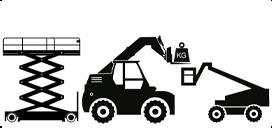
Six types cover working heights from around 8 to over 54 m:
- Mast lifts – compact and narrow, ideal for confined hall areas and maintenance work up to 12 m.
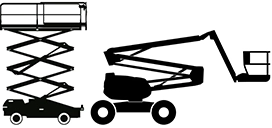
- Scissor lifts – large platform for vertical lifting, electric for indoor use or as a rough-terrain diesel version.
- Articulating boom lifts – reach over obstacles thanks to the articulated boom, electric, diesel or hybrid.
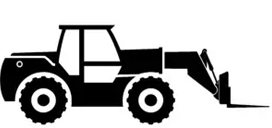
- Telescopic boom lifts – greatest straight reach for maximum working heights.
- Truck-mounted platforms – drive independently between several locations on the same day.
- Spider lifts – for sensitive or uneven ground, embankments and rough terrain.
Which type suits your job depends on working height, outreach, ground conditions and emission requirements. You can find the detailed type comparison with a comparison matrix and selection questions on Aerial work platform rental. The guide Which lift for which job? offers a decision aid in five questions.
How much does it cost to rent a lift?
Rental costs depend on type, working height, drive, rental period and transport distance – there is no single flat rate. You can find all price factors in detail and a reliable guide price via Aerial work platform rental or directly on request: tell us the working height, location and rental period, and you will receive an itemised quote including transport. Whether buying instead of renting pays off is explained in the guide Rent or buy a lift?
Renting in compliance: inspection and operator competence
The operation of aerial work platforms is governed by Dutch occupational health and safety legislation (Working Conditions Act and Working Conditions Decree), in particular the Working Conditions Decree, Chapter 7 (work equipment). Among other things, the employer must ensure the periodic inspection of work equipment under the Working Conditions Decree and the required competence of the operator – regardless of whether the machine is bought or rented. All machines in the Luibl rental fleet are inspected periodically and handed over with a current inspection certificate. On handover, the operator receives an on-site briefing.
