Rent special aerial work platforms for tree care and pruning
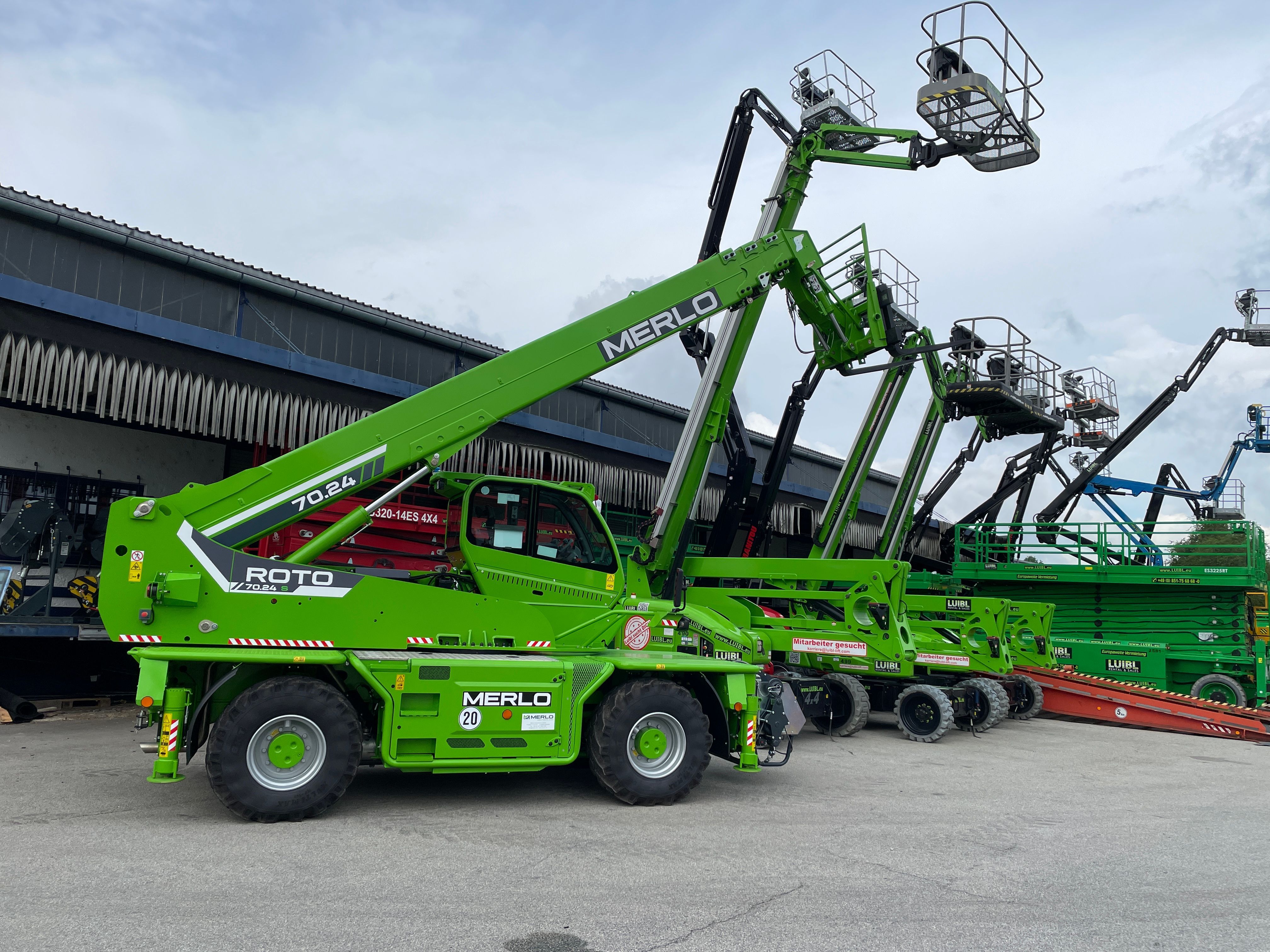
Tree care is technically demanding and limited in time. During the dormant season between October and February, major pruning is possible; in spring and summer, applicable Dutch nature rules, such as the protection of breeding birds, restrict drastic measures. Aerial work platforms are not a luxury here – they are the safe, efficient solution for pruning, crown shaping and deadwood removal at height. Luibl rents specialised access equipment with delivery throughout the Netherlands: spider lifts for narrow private gardens, truck-mounted platforms for municipal and professional large-scale tree care projects, trailer solutions for flexible changes of location. Every machine is supplied with a valid inspection and technical briefing.
Choosing the right aerial work platform for tree pruning
Tree care requires machines that meet three requirements: safe positioning in the tree crown, ground friendliness (protection against damage to lawns and paths) and manoeuvrability on private properties or in urban green spaces.
Spider lifts: maximum flexibility in tight spaces and on soft ground
Spider lifts are ideal for tree care. The wide tracks distribute the machine weight over a large area – perfect for lawns, forest floors and unpaved plots. A gradeability of over 50% allows use in sloping gardens and on embankments where wheels would fail.
Depending on the model, working heights reach 22–28 metres – sufficient for medium-height fruit trees and the poplars common in towns. The compact width (often under 1.5 metres) allows access through narrow garden gates and passages. For larger municipal work, wider spider lifts (up to 1.8 metres) are used – still narrower than truck-mounted platforms.
The most important thing: ground mats. Spider lifts must be positioned on ground mats (wood or plastic) to minimise compaction of lawn and soil. These costs are low but essential for protecting the ground.
Truck-mounted platforms: fast changes of location for municipal tree care
Truck-mounted platforms (usually Ruthmann or Palfinger) reach working heights of up to 34 metres and offer a large outreach – ideal for wide tree crowns and pruning groups of trees. The self-propelled advantage: one driver can move the machine between several sites within a town. This considerably reduces logistics costs.
Disadvantage: the set-up area is larger and requires level spaces. Private gardens under 500 square metres are often too tight; spider lifts dominate here.
Ground pressure is higher than with spider lifts. On sensitive ground (gardens with old planting, wet meadows), ground mats should be used to protect the soil.
Trailer-mounted platforms: the solution for targeted jobs
Trailer-mounted platforms are towed by a truck or tractor. They occupy a middle position: less ground pressure than truck-mounted platforms, less set-up effort than spider lifts. They are economical for jobs on several private properties in succession, as long as the access roads are paved.
Disadvantage: less common for tree care than spider lifts; availability varies.
Decision logic for tree care:
-
Private garden, narrow access, lawn: spider lift (under 1.5 m wide, ground mats).
-
Several individual trees in town, public road: truck-mounted platform.
-
Group of trees, level access, flexible set-up position: trailer-mounted platform.
Technical parameters: reach, working height and outreach
A common misjudgement: working height alone is not enough. A 20-metre platform is useless if the tree is 18 metres tall and the crown extends 5 metres – the outreach must bridge this distance.
Working height vs. outreach
Working height is the vertical range. Outreach is the horizontal distance from the machine to the platform position. Both must be considered together. A telescopic boom lift load chart shows: the higher the platform, the smaller the possible horizontal outreach often is – physically, this is a question of stability.
For tree care this means: measure not only the tree height, but also the distance from the set-up position to the outermost edge of the crown. Give this figure to Luibl with your enquiry.
Platform load and tool weight
Every aerial work platform has a permissible platform load (typically 200–500 kg for scissor lifts, higher for telescopic boom lifts). This load is limited by the total weight, and the limitation becomes stricter the higher and further the platform is extended.
For tree care you typically carry:
-
Operator (approx. 75 kg)
-
Saw, hedge trimmer, gloves (approx. 10 kg)
-
Rope and bucket for lowering cut wood (approx. 5–10 kg)
These loads are small – but at extreme height and outreach it can get tight. Luibl checks this in the load chart.
Ground clearance and support width
Spider lifts have a certain ground clearance (distance between the underside of the tracks and the machine body). Tree stumps, tree roots and lawn edges can cause problems. Clarify this during the site visit.
The support width (distance between the support points on spider lifts) determines the stability against tipping. Wider is more stable – but wider does not fit through narrow gates. A balance must be found here.
Legal framework and time windows under nature rules
Applicable Dutch nature rules – protection during the breeding season
In spring and summer, restrictions apply to major pruning of woody plants, in particular to protect breeding birds. What exactly is permitted depends on the local situation. As a rule, the following are permitted:
-
Road safety (e.g. overhanging branches above footpaths)
-
Necessary tree care (deadwood removal, crown shaping without major pruning)
Practical consequence for your rental planning:
If you are planning major pruning (e.g. pollarding, rejuvenation), book the aerial work platform between October and February. Availability is often tighter during this period because the tree care season is at its peak. A lead time of 4–6 weeks is realistic.
Smaller maintenance measures (deadwood removal, formative pruning, road safety) are possible all year round.
Protecting trees during construction work
During construction work, trees and their root zones must be protected when they are at risk. The combination of aerial work platform and ground mats contributes to this. Document the measures for your project.
Safety and legal requirements for work at height
Work at height under the Working Conditions Decree – safety in tree care
Applicable Dutch health and safety rules set requirements for safe work at height, including in tree care. Relevant points include:
-
Personal protective equipment against falls: harness, lanyard, karabiners.
-
The required operator competence.
-
Periodic inspection of the machines under the Working Conditions Decree.
All Luibl aerial work platforms are inspected before rental and supplied with an inspection report. Personal fall protection is your responsibility – but Luibl is happy to advise.
Wind speeds and weather
Aerial work platforms have wind load limits. Typical: a maximum wind speed of 10–12 m/s (approx. 40 km/h). Stronger winds endanger stability. On stormy days, work must be stopped – this must be factored into your planning.
Outriggers and ground quality
Correctly extended outriggers are not optional – they are the basis of stability against tipping. The ground under the outrigger pads must be level and compacted. Loose gravel, mulch or very wet soil are unsuitable. If in doubt: ground mats.
Logistics and availability in the tree care season
The tree care season runs from October to March. During this period, demand for aerial work platforms is higher. Luibl delivers throughout the Netherlands, by low-loader to your site, and promptly where availability allows.
Availability planning:
-
Short-notice requirement (up to 3 days): low probability during the season. Enquire immediately.
-
Planning (1–2 weeks ahead): good availability, normal rental rates.
-
Lead time (4–6 weeks): best availability and often better rates for long-term rental.
A multi-day rental is often more economical than several single days – talk to Luibl about it.
FAQ: frequently asked questions about rental for tree care
Which aerial work platform is suitable for tree care?
That depends on the tree, the property and the access route. Spider lifts are the first choice for private customers and narrow gardens,truck-mounted platforms for large municipal projects and open spaces. Luibl advises you without obligation during a free site visit.
What does it cost to rent an aerial work platform for tree pruning?
Rental prices vary depending on machine type, rental period and distance. Spider lifts are cheaper per day than truck-mounted platforms; long-term rental is cheaper per day than short-term rental. For specific prices: send an enquiry with project details to Luibl (tree type, height, size of the property, planned rental period).
When is tree pruning legally permitted?
Major pruning is best planned outside the breeding season, in the period from October to February; in spring and summer, applicable Dutch nature rules restrict such work. Exceptions: road safety and necessary tree care without major pruning are possible all year round. Check with your municipality or the competent authority whether your project requires a permit or exemption.
Do I need a driving licence for a truck-mounted platform?
Yes. Truck-mounted platforms are self-propelled machines and require a C1 or C licence, depending on the total weight. Operating the platform itself does not require a special licence, but the operator briefing by Luibl on handover is recommended and is often an insurance requirement.
Are ground mats included in the rental price?
Ground mats are optional and are charged separately if you need them. For lawns and forest floors, however, they are strongly recommended – they help you avoid damage to the ground. Luibl advises whether your property needs ground mats.
How is the briefing for the machine carried out?
Luibl provides the aerial work platform with a briefing. You receive a safety briefing on site – operating the platform, outriggers, emergency stop.
Can I use the platform for several days in a row?
Yes. Multi-day rental is standard. For long-term rental (several weeks), daily costs fall considerably – talk to Luibl. The machine stays on your property and is documented daily.
What happens if the platform is damaged?
Normal wear and tear is included in the rental. Damage caused by operator error or accidents is covered by machinery breakdown insurance. The excess is typically between 250 and 500 euros. Without insurance, you bear the cost risk – with aerial work platforms this can be considerable.
Rental handover checklist for tree care projects
Prepare this information to get a quote quickly:
-
Tree species and height: species (oak, poplar, fruit tree, etc.), approximate height in metres.
-
Crown size and spread: diameter of the crown, distance from the set-up position to the outermost edge of the crown.
-
Ground conditions: lawn, paved courtyard, forest track, slope, soil moisture.
-
Access route: width of the garden gate, clearance height (roof overhang, power lines).
-
Work objectives: heavy pruning, deadwood removal, tree safety, formative pruning.
-
Rental period: one day, several days, weekly during the season.
-
Time window: preferred month - important because of the applicable Dutch nature conservation rules.
With this information, Luibl prepares a binding quote with no hidden costs.
Your next step
Contact Luibl for non-binding advice on your job. Describe your project - tree species, size of the property, access route and planned period. Luibl checks availability, advises on the choice of machine and prepares a transparent quote.
The advice is free of charge. You do not disclose any data you will regret later - and you receive professional input for your project.
Request advice on your job now: https://www.luibl.eu/kontakt/