Mini excavator rental: what you need to know before you rent
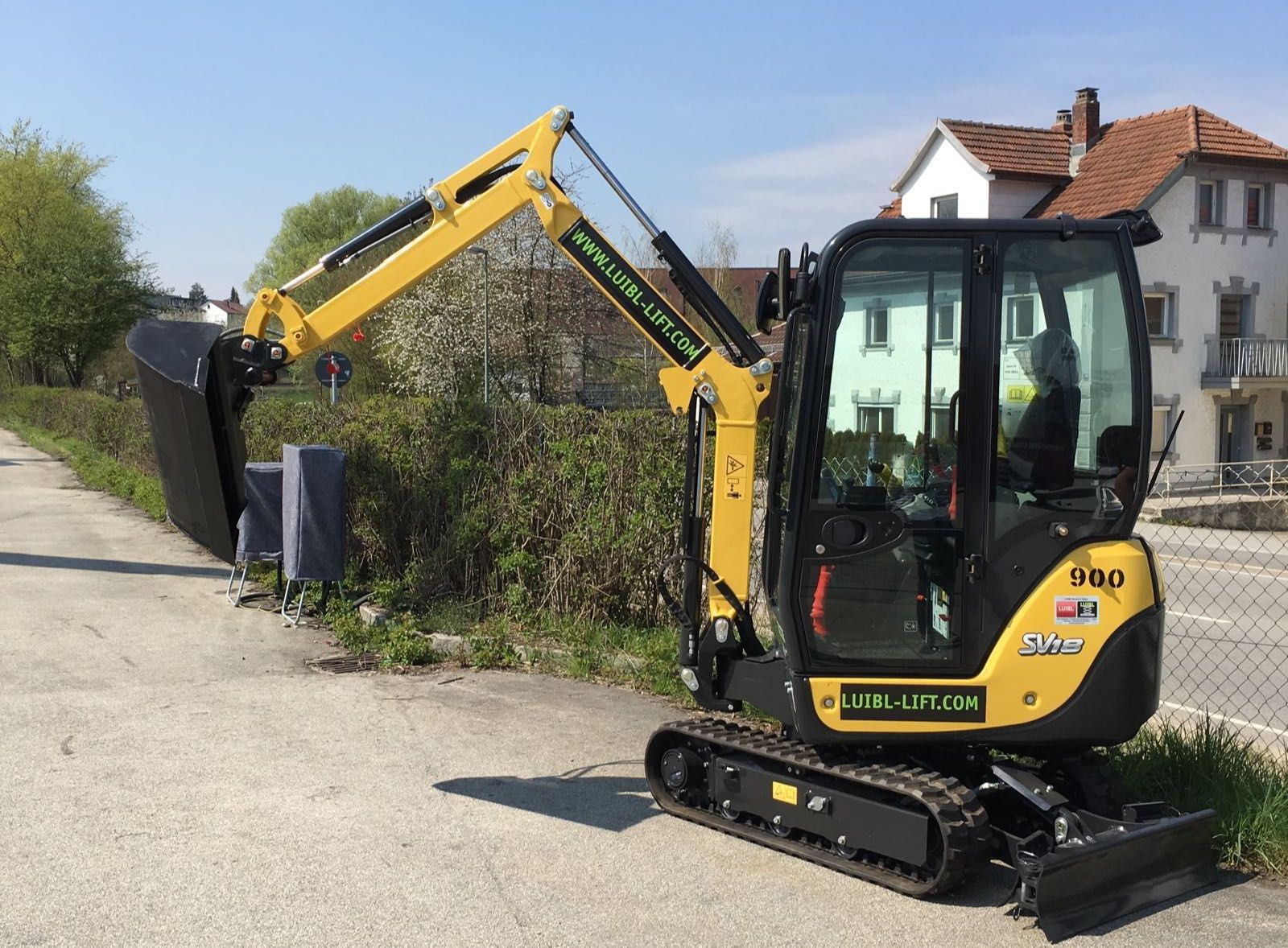
For digging work in tight spaces, the mini excavator is the workhorse of choice. Whether it is a utility trench in a back garden, drainage on company premises or excavating for a foundation - the compact class handles jobs for which a large crawler excavator would simply be too unwieldy. If you only have such work occasionally, renting is the better option than buying: no tied-up capital, no maintenance responsibility, no storage space needed. This guide shows what really matters when renting a mini excavator.
What is a mini excavator - and where does the class end?
The industry typically defines a 'mini excavator' as a crawler excavator with an operating weight of up to around 6 tonnes. The class starts at just over 1 tonne - some manufacturers build even smaller machines - and merges into the compact excavator segment. The decisive feature is not weight alone but transportability: a mini excavator of up to about 3.5 tonnes can be moved on a standard car trailer without the need for heavy transport. In addition, genuine mini excavators usually have a crawler undercarriage with adjustable track width. This allows them to pass through a normal garden gate (from approx. 75 cm wide) - an aspect that decides whether many projects are feasible or not.
Which models are available for rental?
Luibl's mini excavator rental focuses on two weight classes:
1.8-tonne class (Yanmar SV18):
The most compact model in the rental range. Thanks to its narrow dimensions, it gets through tight access points that remain closed to heavier machines. Monoblock swing boom, good ground clearance, all-wheel system with all-wheel drive and all-wheel steering. Typical uses: landscaping, drainage work, utility trenches on private property.
3.5-tonne class (Bobcat E35):
More digging force and digging depth than the 1.8-tonne version, but still compact enough for tight sites and transportable on a trailer. All-wheel system on board, good ground clearance for outdoor work. Applications: road and path construction, foundation work, sewer work. For heavier earthmoving projects - civil engineering, demolition, large sites - Luibl offers crawler excavators up to 30 tonnes (Doosan). This class no longer counts as a mini excavator, but can be requested within the same rental range.
Typical applications
Rented mini excavators are mainly requested for the following work:
-
Trenches for drainage, rainwater pipes and utility lines
-
Excavation and foundation work
-
Excavating areas for car parks, footpaths and driveways
-
Garden and landscape construction
-
Removing small structures (concrete slabs, foundations)
-
Road and path construction on narrow sections
Where a mini excavator is no longer sufficient - excessive digging depth, too heavy a load, too large an area - moving up to a compact or crawler excavator from approx. 5 tonnes makes sense. On request, Luibl advises which machine class suits your project.
Rental prices: how much does it cost to rent a mini excavator?
The rental price of a mini excavator depends on three factors: machine type, rental period and delivery distance.
Daily rates for mini excavators in the 1.8 to 3.5-tonne class start in the low three-digit range. Quoting an exact figure without knowing the delivery location and the specific rental period would not be serious - regional transport costs and utilisation vary too much.
Weekly rental is noticeably cheaper than seven single days, because Luibl charges the transport costs only once. For projects lasting more than two to three days, weekly rental almost always pays off.
Long-term rental of several weeks or months: Luibl prepares individual quotes. For longer projects, terms well below the weekly rate per day are possible. On request, long-term rentals include periodic inspection of work equipment under the Working Conditions Decree and scheduled maintenance. For a binding quote with pricing including delivery, contact Luibl directly: Send an enquiry
Selection criteria: which mini excavator do you need?
Choosing the right machine depends less on a wish list than on the real conditions on site:
Access to the work location: How wide is the passage at its narrowest point? Less than 90 cm? Then the 1.8-tonne class is often the only option. Are there steps or high thresholds? Then a narrow crawler undercarriage with high ground clearance is important. ** Digging depth and swing radius: ** The 1.8-tonne class reaches digging depths of about 1.7 to 2 m. The 3.5-tonne class goes deeper. For digging deeper than 3 m, a larger machine makes more sense.
Ground conditions: On soft or uneven ground (garden, field, unsecured slope), crawler undercarriages work more stably than wheeled drives. The models in Luibl's rental fleet are all equipped with crawler tracks without exception.
**Transport: **Can you move the mini excavator yourself on a trailer, or should Luibl deliver it by low-loader? Up to 3.5 tonnes, you can transport it yourself with a suitable trailer and an appropriately approved towing vehicle. For your own transport planning, the operating weight and machine dimensions are stated in the quote.
Safety and regulations when using a mini excavator
For operating a mini excavator: there is no driving licence requirement under traffic law for the excavator itself. However, anyone operating an excavator on company premises or a construction site is subject to Dutch occupational health and safety legislation (Working Conditions Act and Working Conditions Decree), for work equipment in particular the Working Conditions Decree, Chapter 7. The employer must ensure that excavator operators are sufficiently competent and have been instructed. If you rarely or for the first time work with a mini excavator, do not skip the instruction. Luibl provides an operator briefing on handover. In addition: before any work on ground with buried cables and pipes (gas, water, electricity, telecommunications), you must request the location of cables and pipes in line with applicable Dutch rules. This protects against damage and liability. The machines in Luibl's rental range are inspected under the Working Conditions Decree and serviced before every rental. Inspection documentation is available on request.
Rental with delivery or self-collection?
Luibl delivers mini excavators with its own low-loader fleet directly to your site - delivery throughout the Netherlands. This saves you your own transport equipment and logistics effort. Especially for heavy machines or long distances, delivery by Luibl is the simplest option. Self-collection is also possible. Locations on request.
Rent or buy: when does which option pay off?
The rule of thumb in the industry: if you use a machine more than 60% of the time, buy it. If you need it occasionally or for specific projects, rent it. With a mini excavator, maintenance, periodic inspections, spare parts and storage space create ongoing costs for your own machine that are often underestimated. A rented machine arrives inspected and ready for use - and is collected again after the job. If you work with a mini excavator fewer than 20 to 30 days a year, renting is usually cheaper.
FAQ: mini excavator rental at Luibl
How quickly is a mini excavator available?
Requests at short notice are possible. Availability depends on the specific model and the region. Via the contact form or by phone, you will receive a prompt response on working days. Luibl can be reached Monday to Friday from 08:00 to 17:00.
Is there a minimum rental period?
Daily rental is possible. For long-term projects, weekly or monthly rental pays off - with better terms on request.
Do I need a driving licence for the mini excavator?
No driving licence is required for the mini excavator on site. However, the employer must ensure the required competence of the operator and provide instruction. If the excavator is driven on public roads, the required Dutch driving licence category applies.
What happens if the machine breaks down on site?
Luibl offers technical on-site support. Using the technician request, you can call out a technician directly during the rental.